
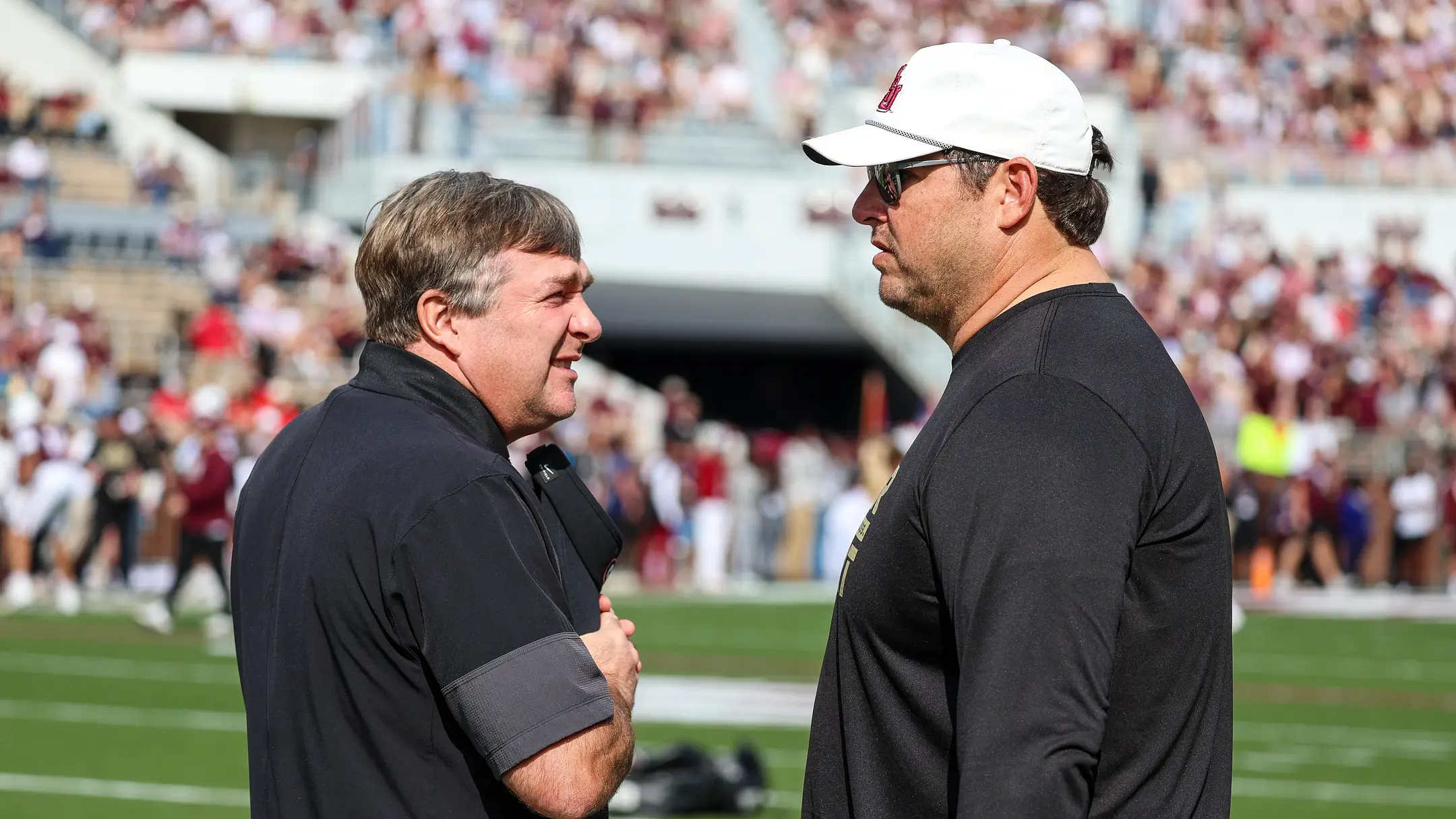
The 2026 SEC season brings major changes. Coaches moved, and rosters flipped. The transfer portal reshaped entire teams because the churn never stops. Some programs climbed fast, but others slipped. This year feels unpredictable as the league enters a new era. These Josh Pate SEC Head Coaches rankings use recent results while weighing talent acquisition and program direction.
The rankings below lean heavily on recency, not decade‑old accomplishments. What a coach did in 2016 matters far less than what he did in 2024 and 2025. And with the SEC now deeper and more volatile than ever, the gap between the top tier and the middle tier has tightened. This list focuses on the top ten because these coaches have separated themselves from the rest of the league with recent results and roster stability.
SEC Head Coaches: Top Ten
1. Kirby Smart (Georgia)
Kirby Smart remains the top coach in the SEC. Georgia won back‑to‑back SEC titles. They reached the title game three straight years. No active SEC coach has beaten him in Atlanta. His recruiting has been the best in the country over the last four‑year blend. His development matches it. Georgia still plays with the same edge it had in the mid‑2020s. The program has stayed consistent while the sport changed around it. If you face the block G, you face a complete roster and a complete staff.
2. Kalen DeBoer (Alabama)
Kalen DeBoer sits at No. 2 because his recent results demand it. He has two top‑six recruiting classes at Alabama. DeBoer made the playoff last year. He is 2–1 against Kirby Smart since arriving in the SEC. DeBoer also beat Steve Sarkisian in the playoff while he was at Washington. Alabama is not the No. 1 program anymore, but they are still elite. The only knock is a slight drop from the Saban era. But they still reached the playoff. If the next three years show a decline, the ranking will change. Right now, the résumé puts him at No. 2.
3. Steve Sarkisian (Texas)
Texas feels ready to explode. They won twelve, thirteen, and ten games over the last three seasons. They recruit at a top‑tier level. Sark keeps upgrading his staff, and the roster keeps improving. The culture is strong, and the talent is deep. The only thing missing is a championship run. Texas is close, but they have not reached the summit. Sark enters 2026 at No. 3 because the results and roster strength support it.
4. Mike Elko (Texas A&M)
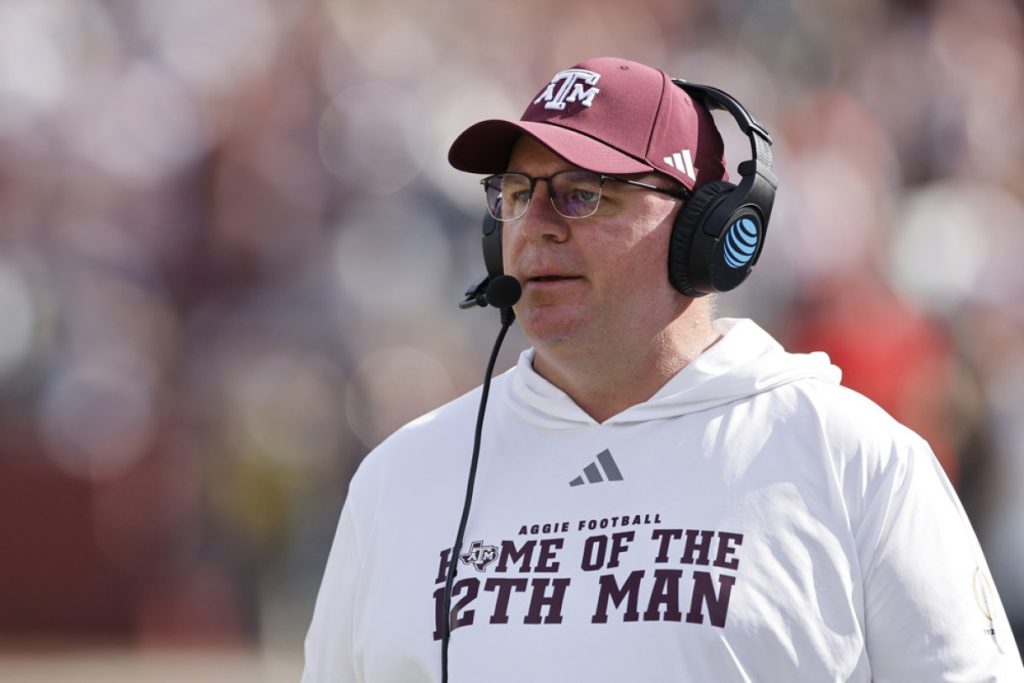
Mike Elko made the playoff by Year 2 at Texas A&M. That alone puts him high on this list. A&M has been a top‑ten recruiter and a top‑ten portal team. They may push for the No. 1 class in 2026. Elko brought his evaluation and development strengths from Duke. Then he paired them with deep resources. A&M was bounced early in the playoff, but that is part of the growth curve. The program is trending upward, and Elko enters 2026 at No. 4.
5. Lane Kiffin (LSU)
Lane Kiffin did unheard‑of things at Ole Miss. He won eleven, ten, and thirteen games in his last three seasons there. Now he has LSU’s roster and LSU’s resources. The question is where he sits in his career arc. LSU could be the final chapter, or it could be the beginning of a dominant run. His first season in Baton Rouge will tell us a lot, but his résumé already puts him at No. 5.
6. Clark Lea (Vanderbilt)
Clark Lea’s rise is one of the most impressive stories in the SEC. Vanderbilt won seven games and then ten games. Then they nearly made the playoff last year. They beat Alabama, LSU, Missouri, and Tennessee. They also played Texas close twice. Lea faced a major inflection point two years ago. He rebuilt the program with tough decisions. Vanderbilt even landed the No. 1 quarterback recruit in the country. Critics may say his hires or his quarterback carried the load. However, that is what good head coaches do. Lea enters 2026 at No. 6.
7. Eli Drinkwitz (Missouri)
Missouri won eleven, ten, and eight games over the last three seasons. The trend dipped slightly, but the context matters. Missouri is more likely to lose assistants than to hire them away. Drinkwitz has kept the program competitive anyway. He added Austin Simmons, and he continues to recruit well enough to stay in the mix. Missouri does not have Texas‑level resources. But still Drinkwitz has elevated the program. He enters 2026 at No. 7.
8. Brent Venables (Oklahoma)
Brent Venables is the hardest coach to rank because his results swing. His last four seasons were 6–7, 10–3, 6–7, and 10–3. Oklahoma made the playoff last year. Each strong season has been followed by a down year. Venables rebuilt Oklahoma’s defense overnight after the Lincoln Riley era left it soft and inconsistent. They recruit at a top‑fifteen level. They regained toughness. The inconsistency keeps Venables at No. 8.
9. Josh Heupel (Tennessee)
Josh Heupel enters 2026 with a major caveat. Tennessee lost its starting quarterback after spring last year. They added Joey Aguilar at the last minute. They still won eight games, and they nearly upset Georgia. Heupel pulled Tennessee out of the gutter and into playoff contention once. However, they have not reached Atlanta. With uncertainty at quarterback again, Heupel sits at No. 9.
10. Jon Sumrall (Florida)
Jon Sumrall has never coached an SEC game, but he is 43–12 as a head coach. He went 12–2 and 11–2 at Troy. Then he went 9–5 and 11–3 at Tulane. He made the playoff at Tulane. Sumrall brings toughness and identity to Florida. His ranking is based on what he has already proven. Sumrall enters the SEC as a top‑ten coach, and now he must validate it.
The rest of the SEC enters 2026 in a far less stable position. Auburn, Kentucky, and Ole Miss are rebuilding under new coaches. Each program faces roster churn because the portal hit them hard. Arkansas and South Carolina need better quarterback play. Both teams must show real progress to calm their fanbases. Mississippi State is still adjusting under Jeff Lebby. Their roster has heavy turnover. These programs could climb fast, but they could also fall behind because the league moves quickly and stability matters.
Please continue to follow The Unlocked Info for future analysis, updates, and results.